Affichage des articles dont le libellé est Business and Finance. Afficher tous les articles

samedi 2 octobre 2010

9 Businesses You Can Start In Your Pajamas in 2010


Internet Marketing –– Jason Sadler, IWearYourShirt.com

So you've got a ton of friends on Facebook and a loyal Twitter following. Why not profit off them? Jason Sadler has found a way to capitalize on all the hype surrounding social media marketing. Three-hundred sixty-five days a year, Sadler serves as a live billboard for companies and charities on all the major social media sites. Sadler, who launched IWearYourShirt.com at the end of 2008, wears a shirt a day, and sells each calendar day according to its numerical value. On January 10, for example, a company would pay Sadler $10 to wear its shirt. He works from his home in Jacksonville, Florida, and leverages his social media following by blogging, tweeting, filming a live video show, and updating his Facebook photo, all while wearing the designated T-shirt of the day. And, yes, he will still wear your shirt to a wedding, or even if he's sick in bed. Now that the idea has taken off, Sadler has hired a West Coast counterpart -- with a whole new following -- to expand the company's marketing reach.

7 Ways to Make Money Without Actually Having a Job

Job market got you down? If applying to real-person jobs isn’t landing you the position you want, it may be time to try something different. Like offering up your body to medicine. Or selling your opinion for $50/hour. Or, easiest yet, hanging out at someone else’s house.

We’ve come up with seven ways you can make money without actually having a job. See if any of the opportunities below help you think outside the employment box.

1. House Sitting

homestay

While petsitting and babysitting generally don’t involve much down time, house sitting is a literal job: You sit in someone else’s house. For money. Sure, you have to water their plants every so often, but the rest of the time, you can relax. Just don’t break or steal anything.

Pros: Get paid to sit around in someone else’s house.
Cons: None, unless you throw a kegger while you’re there.

Pay range: $50+ per day.

2. Medical studies

syringe

Can’t sleep? Depressed or anxious? Got bunions? Chances are, someone wants to use you as a guinea pig for their latest product. Craigslist is usually chock full of opportunities in this field.

Pros: Get paid while potentially curing whatever ails you.
Cons: Nobody’s sure what the side effects are. That’s why they’re hiring you.

Pay range: $100+

3. Consumer surveys

onlinesurveys

A quick, painless way to get pennies in your cup is to fill out customer surveys for marketing research companies. Mind you, it’s going to take a lot of Internet time to turn those pennies into dollars. If time is what you have, surveys might be worth a try.

Pros: Low effort.
Cons: Low pay. Scammers abound in this industry.

Pay range: Usually a few dollars per survey.

4. Homestays

foreignstudent

Students around the world come to the US to study and learn English. Many of these students choose to live with American families to get to know the culture better. Those host families, meanwhile, get paid a stipend to accommodate that student.

Pros: Get paid to have a student live with you and talk to them in English.
Cons: You may hate the student.

Pay range: $500+/month

5. Egg/sperm donation

sperm
Image: Yale Medicine

Sperm donation doesn’t net you as much as donating eggs does. Then again, giving sperm doesn’t require hormones, weight gain, and surgical harvesting sessions.. Call it hazard pay.

Pros: It’s easy, if you’re a guy.
Cons: It’s hard and painful, if you’re a woman.

Pay range: Sperm: $100—if you’re lucky. Eggs: $1,000-$30,000+

6. Focus groups

focusgroup
Image: Behavior Research

Research departments will pay you hundreds of dollars to sit around for a few hours and discuss topics of their choosing. The pay per hour can be good, if you’re selected.

Pros: High pay for little time.
Cons: You might not get selected. Watch for scammers.

Pay range: $50+/hour

7. Surrogacy

preg

If you’ve successfully carried a child to term once before, why not do it again–for pay? Lots of couples want you to carry their precious bundle, often for close to $10,000.

Pros: Get paid to for living your life–with someone else’s bundle of joy in your stomach.
Cons: It’s someone else’s bundle of joy.

Pay range: $7,000+

Bank of America sees $194m loss

Wall Street giant Bank of America has reported a net loss of $194m (£120m) in the last three months of 2009.

That compared with a loss of $1.8bn in the same period a year earlier.

It added that it had repaid the $45bn government bail-out money it had received, but taking the impact of this into account, it made a loss of $5.2bn.

Meanwhile, Morgan Stanley said it made a profit of $413m in the fourth quarter, helped by a return to profit in its investment banking business.

A year ago, the bank reported a $10.5bn loss, the bulk of which came from investment banking, which made massive losses at the height of the financial crisis.

Morgan Stanley also said it had set aside $14.4bn in compensation expenses for 2009 - a 31% increase on the previous year.

Earlier this week, fellow US bank JP Morgan Chase reported a profit of $3.3bn, while Citigroup said it made a $7.6bn loss in the final quarter.

'Disappointing' loss

For the whole of 2009, Bank of America made a net profit of $6.3bn, an increase on the $4bn profit it made in 2008.

The bank also said it had set aside $10.1bn to cover bad loans during the quarter.

"While it's disappointing to report a loss for the fourth quarter, there were a number of important accomplishments worth noting," said chief executive Brian Moynihan.

"First, we repaid the American taxpayer, with interest, for the Tarp [Troubled Asset Relief Program] investment.

"Second, we have taken steps to strengthen our balance sheet through successful securities offerings. And third, all of our non-credit businesses recorded positive contributions to our results."

'Strange creature'

Bank of America said paying back the Tarp money cost it $4bn.

It received the money after agreeing to buy Merrill Lynch in September 2008 in a deal worth $50bn.

The chief executive at the time, Ken Lewis, was widely criticised for going ahead with the purchase of Merrill, and he left the bank at the end of 2009.

The bank was now a "strange creature", said Stephen Pope, chief global equity strategist at Cantor Fitzgerald.

"You have got Merrill Lynch on the investment banking side... [providing] probably healthy revenues from bond underwriting and trading.

"However, Bank of America is probably still facing difficulties of impairment charges against outstanding commercial and consumer debt."

Bank of America's credit cards division made a quarterly loss of $1bn, while its mortgage business lost $993m.

US Consumer prices fall for the first time in 50 Years

Consumer prices fall in 2009

The annual decrease is the first in more than 50 years. Month to month, a slow rise in the inflation indicator increases the likelihood that the Fed will keep interest rates low.

growing worries about a future surge in inflation, consumer prices barely budged last month and fell for all of 2009 -- the first annual decline in more than half a century.

The latest report on the consumer price index, released Friday by the Bureau of Labor Statistics, increases the likelihood that Federal Reserve officials at their next meeting later this month will stand pat on their policy of setting interest rates at near zero for "an extended period."


In recent weeks, there have been increasing signs of a split at the Fed over how soon the central bank should begin tightening credit and monetary policy to avoid a future outbreak of inflation. Some officials want to start raising rates relatively soon, while most see no hurry to change course amid double-digit unemployment and little growth in prices.

And there appears to be little or no support for a pull-back in the immediate future.

"The Fed is correct in its analysis of inflation, and should be more worried about unemployment than inflation at this stage of the game," Diane Swonk, chief economist at Mesirow Financial, wrote in a research note.

In December, consumer prices edged up just 0.1% from November, and they were up 2.7% from a year earlier. Stripping out food and energy prices, which tend to be volatile, consumer prices were up a modest 1.7% over the 12-month period.

Averaging all the months last year, the government said, the price index fell 0.4% from 2008. The last time this measure dropped was in 1955 when Dwight D. Eisenhower was president and Ray Kroc opened his first McDonald's restaurant.

Back then, unemployment was below 5% and the economy was creating hundreds of thousands of jobs a month.

Last year was a different story. The fall in the consumer price index largely stemmed from lower oil prices and underscored the deep recession that also held down wages and led to outright price declines for certain goods, such as personal computers and used cars, as well as for services such as lodging.

"It's good news for consumers; inflation was low," said Nigel Gault, an economist at IHS Global Insight. But the bad news, he said, was that fewer people in America had jobs, and wages overall barely kept pace.

Gault reckons this year won't be any better for consumers. He sees overall prices rising 1.7% this year, and core inflation, which excludes food and energy, turning up just 1.5%. But wages will probably increase at a similarly modest rate, meaning most consumers won't see gains in their buying power.

Chinese online revenue up 30% in 2009

Online revenue generated in China surged by more than 30% to 74.3bn yuan ($10.9bn, £6.7bn) in 2009, a research firm has said.


iResearch predicts that online earnings in China from advertising, games, shopping and other activities will surge 51% to 112.3bn yuan this year.

Separately, a report said that Google has begun talking to China about not filtering content on its search engine.

It refused to confirm this, saying it "won't be giving a running commentary".

"We've said already that we will be taking a new approach in China," a Google spokesman in London said.

"We will be discussing with the Chinese authorities the basis on which we could operate an unfiltered search engine within the law, if at all."

Chinese dilemma

On 12 January, the company said in its blog that Chinese human rights campaigners using its Gmail service had been hacked.

It said it would hold talks with the Chinese government to stop censoring its search engine, and would leave the country if an agreement could not be reached.

China has said that foreign internet firms are welcome to do business there "according to the law".

Google currently holds about one-third of the Chinese search market, far behind Chinese rival Baidu, which has more than 60%.

China has more internet users - about 380 million - than any other country and is a lucrative market.

When Google launched google.cn in 2006, it agreed to censor some search results - such as the 1989 Tiananmen Square protests, Tibetan independence or Falun Gong - as required by the Chinese government.

The Chinese business magazine Caijing reported that Google has already moved some of its Beijing-based employees to Hong Kong.

Save Cash, Buy a Clunker

Just when you thought that America’s supply of cheap cars fell victim to Cash for Clunkers, a new website specializing in heaps costing less than $1,000 showcases prime examples of automotive detritus — some of which are still capable of highway travel.

Cars for a Grand is the brainchild of online entrepreneurs Chris Hedgecock and Jorge Gonzalez, the same guys behind Zero Paid. The site allows for individual users to post cars for sale, and scours eBay and classified ads for the best buckets of bolts. To promote the site, the founders bought a 1974 Pontiac LeMans for $900 and drove it across the country last summer.

Gonzalez says the site is popular with people who just don’t have a lot to spend, or who don’t want to spend what they do have on a car. “With gas prices and the economy the way it is, people are looking for creative ways to trim the fat,” he said.

A quick look at the site proves that cost-conscious doesn’t have to mean boring.

A bitchin’ Camaro on sale for less than the down payment on a new one proves that money can’t buy class, and short money buys even less of it. If you want to let the world know you drive a BMW, you can snag a high mileage ‘91 5-series for less than a year’s worth of internet dating fees. And, for the mechanically inclined, there are plenty of steaming heaps of coolant leaks, melted wiring harnesses and salvage titles.

Even woefully underpaid automotive bloggers can afford a $1,000 mid-’80s Nissan 300ZX in less-than-stellar condition — which we’re seriously considering. After all, a bonus of not paying $10k for a cherry example of a classic car is that you can drive it like you’re a teenager.

We’ve owned plenty of beaters throughout the years and they’ve all served us well. In fact, a ‘91 Volvo 240 with missing body trim and intermittent brake lights is currently rusting away in this writer’s driveway. Grand total? $600. It actually cost more to register and insure it for a year. It ain’t pretty, but it’s a perfect around-town car for a girlfriend who prefers public transportation.

Let us know about your favorite sub-$1,000 car. Maybe it’s the vintage VW that got you through grad school, or the clapped-out Taurus that’s still in your garage sitting next to the $4,000 LeMond you ride to work every day.

Photo: Flickr / Erica Marshall

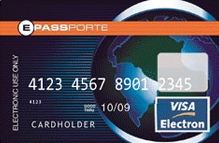
VISA Blocks ePassporte


Credit card giant VISA International has suspended its business with ePassporte, an Internet payment system widely commonly used to pay adult Webmasters and a raft of other affiliate programs.

Company owner Christopher Mallick broke the news to ePassporte customers in an e-mail sent Thursday, saying Visa International had suspended the company’s ePassporte Visa program, which is processed through St. Kitts Nevis Anguilla National Bank.

...


Dear ePassporte Account Holders,

Please be advised that, at 12:00 PM PDT today, September 2, 2010, we were notified that effective immediately, Visa International has suspended our banking partner’s (St. Kitts Nevis Anguilla National Bank) ePassporte Visa program. The ePassporte e-Wallet program continues to be up and running, except funds cannot be transferred between your Visa Account and your e-Wallet. At this time ePassporte can no longer issue Visa Cards, and the ability for our Account Holders to make point of sale purchases and withdraw funds from ATMs has also been suspended.

At this time we do not know why this drastic action was taken by Visa. To us, it is unconscionable that such action would be taken without the opportunity for ePassporte to fully understand Visa’s reasons and to be able to take all steps necessary to keep our program running the way it has so successfully done for over 7 years. But that is what Visa has done.

As soon as we have more information we will be in contact with you.

In the meantime please be assured that your funds are safe.

We are very sorry for the short notice and apologize for any inconvenience this may cause. The ePassporte team is working diligently to rectify this situation.

We kindly ask you to bear with us while we work through this issue.

Please feel free to contact us via the message center or at our call center, should you have any questions, comments or concerns.

Thank You,

Christopher Mallick


ePassporte’s Visa Virtual Account allowed customers to pay online at any Website that accepted Visa cards. The program also issued customers physical cards that could be used to withdraw cash at ATMs around the globe.

I reached out to both Mallick and Visa for further details and will update this blog if I hear from either.

Update, Sept. 7, 1:07 p.m. ET: Visa just issued the following statement, sent to me via e-mail in response to my request last week for more information:

“At the request of St. Kitts-Nevis-Anguilla National Bank (SKNA), on September 2, 2010, Visa blocked network access for prepaid cards issued by SKNA and operated by ePassporte.com to address certain program deficiencies. ePassporte.com is a third-party agent that works with SKNA.

“It is important to note that impacted SKNA prepaid cardholders are still able to access their funds through SKNA or SKNA’s agent, ePassporte.com. For more information cardholders should contact SKNA or ePassporte.com.

“Visa is committed to maintaining the integrity of its global payment network and routinely conducts due diligence to ensure Visa prepaid programs adhere to the company’s stringent program requirements and controls.”

Original post:

This news caught my attention because I have recently encountered ePassporte accounts tied to several shady affiliate programs, such as those used to reward people who promote rogue anti-virus products and online pharmacy sites.

A number of adult Webmaster forums are buzzing with the news, but few seem to know more than what’s in the statement from ePassporte. However, the administrator of the online forum italkcash.com suggests that the move by Visa is in response to new anti-money laundering requirements mandated by the Credit Card Act of 2009, which affects prepaid cards and other payment card instruments that can be reloaded with funds at places other than financial institutions.

While ePassporte’s Mallick can’t be happy about these developments, the situation may provide a nice bump for his new movie: Mallick helped produce the Paramount film Middle Men, a movie released Aug. 6, 2010 that is based on his personal experiences in the porn Web site billing industry. The synopsis from the film’s Wikipedia entry seems oddly prescient:

In 1995, straight-and-narrow businessman Jack Harris (Luke Wilson) who builds the first online billing company dealing exclusively with adult entertainment, finds himself in the middle of a whirlwind filled with starlets, con men, Russian mobsters, federal agents, and international terrorists. Caught between a porn star and the FBI, Harris learns that even becoming one of the wealthiest entrepreneurs of his generation may not be enough to keep him out of trouble. It is based on the experiences of producer Christopher Mallick.

Using Windows for a Day Cost Mac User $100,000

David Green normally only accessed his company’s online bank account from his trusty Mac laptop. Then one day this April while he was home sick, Green found himself needing to authorize a transfer of money out of his firm’s account. Trouble was, he’d left his Mac at work. So he decided to log in to the company’s bank account using his wife’s Windows PC.

Unfortunately for Green, that PC was the same computer his kids used to browse the Web, chat, and play games online. It was also the same computer that organized thieves had already compromised with a password-stealing Trojan horse program.

A few days later, the crooks used those same credentials to steal nearly $100,000 from the company’s online accounts, sending the money in sub- $10,000 and sub-$5,000 chunks to 14 individuals across the United States......


Now, Green’s firm — DKG Enterprises, a party supplies firm based in Oklahoma City — is wrangling with its bank over who should pay for the loss, said Joe Dunn, the company’s controller. So far, DKG has managed to recover just $22,000 of the $98,000 stolen in the April 27 incident.

Unlike consumers, businesses that lose money as a result of stolen online banking credentials usually are left holding the bag. As such, I’ve frequently advised small business owners to avoid banking on Windows systems, since all of the malicious software currently being used by these criminals to steal e-banking credentials simply fails to run on anything other than Windows. What’s more, the tools these crooks are using — mainly the Zeus Trojan — almost always outpace anti-virus detection at least by a few days, and by then it’s usually too late.

But the advice about banking on a dedicated, non-Windows machine only works if you follow it all the time. As this incident shows, it does no good for small business owners to use a Live CD or a Mac or some other approach only some of the time.

“He knew better than that,” Dunn said of his boss’s logging into the family Windows machine. “The thing about it is this wouldn’t have been able to happen if the security had been place that is currently in place, which means he can only access the bank’s site from his Mac. We no longer allow access from any other computer other than his.”

Dunn said that not long after the fraudulent transfers were sent out, he heard from one of the money mules that were sent the firm’s money and asked to wire it overseas to the fraudsters.

“This guy, he went to go use his debit card to fill up his car at a gas station and his card was declined,” Dunn said. “He was trying to figure out what had happened, so he researched where the money came from, went online and called the first number he could find and of course he got me. All I could do is refer him to the FBI. I think he’d figured out by that point what had happened.”

Dunn added the company’s bank is disavowing any responsibility for the incident, but that there is a small silver lining.

“Our take is we weren’t provided the utmost security to prevent this from happening,” he said. “It’s sad in this day and age, and we’ll probably have to take it as a hard lesson learned. On the bright side, though, the owner’s wife now has a new Mac.”